Afternoon Show: Atlanta's Daytime Movie Crowd Is Bigger Than You Think — and Theaters Are Finally Noticing
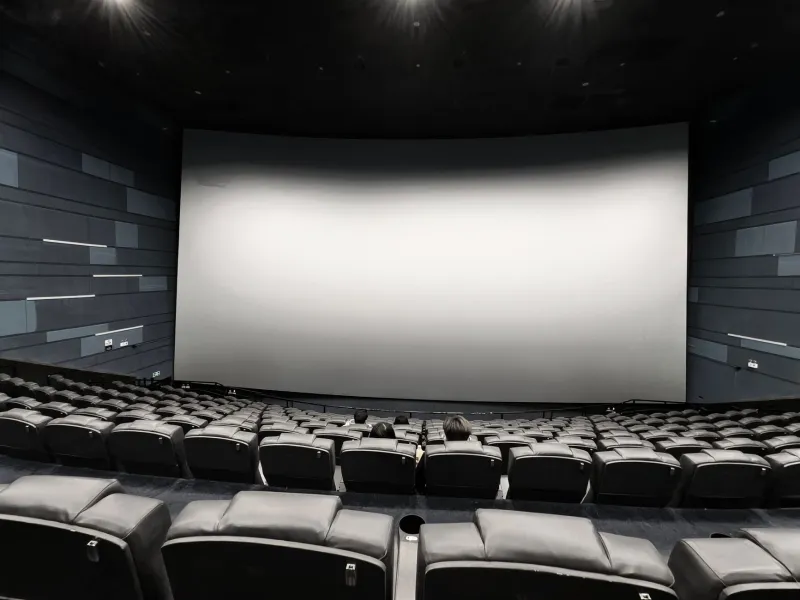
Walk into an Atlanta multiplex on a Wednesday at 1 p.m. and you'll find something that might surprise you: people. Not a handful of retirees and the occasional unemployed film buff — actual crowds, filling rows, buying popcorn, staying for the credits. The matinee is back, and it never quite left.
What's changed is who's in the seats and why they're there. The afternoon screening, long dismissed as the consolation prize of moviegoing, has quietly become the preferred slot for a growing and surprisingly diverse segment of Atlanta's theater audience. Understanding that shift means understanding how Atlanta's workforce, social rhythms, and relationship with leisure time have all changed — and how the city's theaters are scrambling to keep up.
The Remote Work Effect
Let's start with the most obvious driver: the restructuring of the American workday. Atlanta, like most major metros, saw a dramatic expansion of remote and hybrid work arrangements in recent years, and while some of that flexibility has contracted, a substantial portion of the city's workforce still operates on schedules that don't conform to a strict 9-to-5 office structure.
For these workers, a Tuesday or Thursday afternoon movie isn't playing hooky — it's a legitimate use of a flexible lunch block, a mental health break between meetings, or a deliberate end to a workday that started at 6 a.m. "I work from home and I schedule my own day," said one marketing consultant based in Midtown who estimates she catches a matinee two or three times a month. "Going to a 1:30 showing and being back at my desk by 4 is just... a thing I can do now. It's kind of amazing."
Theaters near Atlanta's denser residential and mixed-use neighborhoods — areas with high concentrations of remote workers — have noticed the uptick. Auditoriums that once played to near-empty rooms on weekday afternoons are seeing consistent, if not packed, attendance. The demographic skews younger than the traditional matinee crowd, which has pushed some locations to reconsider how they program and market afternoon slots.
Seniors Aren't Going Anywhere
Before remote workers discovered the matinee, there was already a loyal daytime audience: Atlanta's retired and semi-retired population. And they're not being displaced by the new crowd — if anything, the two groups are coexisting in ways that have made afternoon showings more economically attractive for theaters.
Senior discounts, which many Atlanta chains still offer for afternoon screenings, remain a powerful draw. But it's not just the price. For many older adults, the afternoon show is simply the better experience — less crowded than prime-time weekend screenings, quieter (usually), and easier to navigate for those who prefer to avoid late nights or heavy weekend foot traffic.
"I've been coming to the 11 a.m. show on Fridays for years," said one 74-year-old woman at a theater in the Perimeter area. "It's my thing. I know the staff. The theater isn't packed. I can take my time getting settled." She mentioned that a friend recently started joining her — a friend in her early 40s who works remotely. "She discovered that this was a perfectly reasonable way to spend a Friday morning. Which, yes, it is."
That intergenerational matinee convergence is something theater managers are paying close attention to. When two distinct audience segments — seniors with disposable time and remote workers with flexible schedules — both gravitate toward the same slot, it creates a more economically viable afternoon program than either group could sustain alone.
Shift Workers and the Scheduling Puzzle
There's a third group that rarely gets mentioned in matinee coverage: shift workers. Atlanta's economy runs on healthcare, hospitality, transportation, and logistics — all industries with significant non-traditional scheduling. A nurse finishing a 7 a.m.-to-3 p.m. hospital shift, a hotel employee who works evenings and has mornings free, a warehouse worker on a swing schedule — these are real Atlanta residents for whom a 2 p.m. Thursday movie is a logical choice, not an indulgence.
"People assume the matinee crowd is all retirees," said one theater employee at a Southside Atlanta location. "But we get a lot of people who just got off work. Healthcare workers in scrubs. People who work nights. The afternoon is their evening."
This segment of the matinee audience is perhaps the most underserved in terms of marketing. Theaters promoting afternoon screenings tend to lean on senior discounts and the general appeal of cheaper tickets — messaging that doesn't necessarily resonate with a 35-year-old ER tech who simply happens to be free at 3 p.m. on a Tuesday.
How Atlanta Theaters Are Adapting
The good news for daytime moviegoers is that at least some Atlanta-area theaters are paying attention and adjusting accordingly. A few trends worth noting:
Expanded afternoon programming. Some locations that previously ran limited afternoon showtimes — particularly on weekdays — have added screens and staggered start times to accommodate demand. If a 1:30 showing fills up more reliably than it used to, adding a 3:00 option makes sense.
Food and drink timing. Theaters with full-service kitchens have started treating afternoon screenings as a lunch or early-dinner opportunity rather than an afterthought. A 1:30 movie with a full food menu is a different value proposition than a 1:30 movie with just popcorn and candy.
Targeted promotions. A handful of chains have experimented with weekday afternoon membership perks, bundling discounted tickets with loyalty program benefits in ways designed to build habitual daytime attendance. Whether these programs have staying power remains to be seen, but the instinct — recognizing and rewarding the afternoon audience — is the right one.
The Afternoon Advantage
Ask a committed matinee-goer why they prefer afternoon screenings and you'll hear variations on the same theme: it just feels better. Fewer phones out. Less noise. A more relaxed energy in the auditorium. The sense that everyone in the room chose to be there, rather than defaulting to a Friday night movie because it was the obvious thing to do.
There's something to that. The afternoon movie crowd in Atlanta tends to be composed of people who made a deliberate decision — who rearranged a schedule, drove across town, or built a routine around showing up. That intentionality changes the room in ways that are hard to quantify but easy to feel.
Atlanta's theaters have spent years trying to figure out how to bring audiences back and keep them coming. Part of the answer might be as simple as acknowledging that a significant chunk of those audiences would prefer to show up before dinner — and meeting them there.