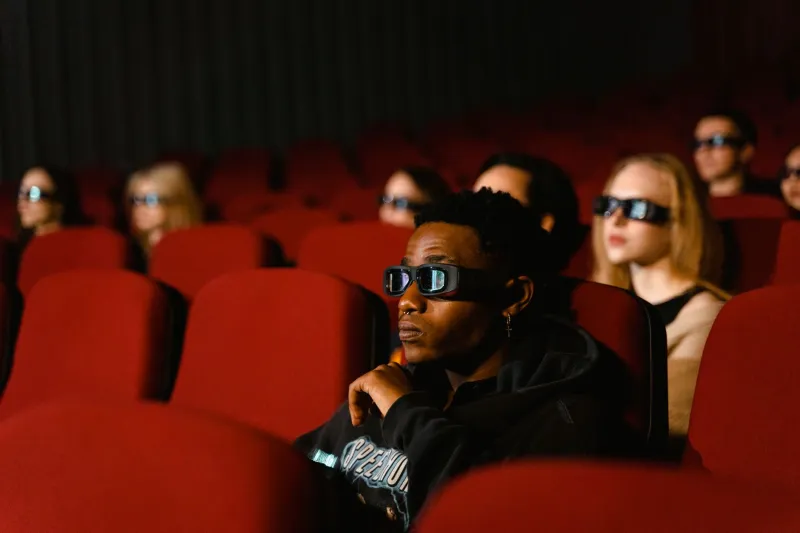
Same Theater, Different Universe: How Atlanta's Youngest and Oldest Moviegoers Are Rewriting the Rules

On a recent Saturday evening at an AMC location in the metro Atlanta area, two very different things were happening simultaneously. Near the entrance, a cluster of twenty-somethings were taking photos in front of the movie poster display — not to document what they were seeing, exactly, but to mark the occasion of being out together, in person, dressed up a little, doing something that felt intentional. A few feet away, a couple in their mid-sixties moved through the lobby with the quiet efficiency of people who know exactly where they're going and have been doing this for decades. Same building. Completely different experience.
That split-screen moment captures something real about Atlanta's movie theater scene right now. Attendance is climbing back across the board, but the reasons people are showing up — depending on which generation you're talking to — are almost philosophically different. And for theater operators trying to serve everyone under one roof, that gap is both a challenge and, increasingly, a genuine opportunity.
Gen Z Didn't Come Here to Watch a Movie. They Came Here to Live One.
It might sound like a knock on younger audiences, but it's actually a compliment: Gen Z has reclaimed the movie theater as a social space in a way that older generations largely abandoned. For a cohort that grew up with streaming, with TikTok, with the ability to pause and rewind anything at any moment, the appeal of a movie theater isn't the content. It's the constraint.
"My phone is off, my friends are right there, and nobody can text me something stupid for two hours," said Jaylen, 22, a student at Georgia State who described going to movies as his preferred way to "actually be present" with people. "It's like a group activity that forces everyone to stop multitasking."
This sentiment comes up again and again in conversations with younger Atlanta moviegoers. The theater functions as a digital detox with a social wrapper — a permission slip to be somewhere specific, with specific people, doing one thing. The movie itself is often secondary to the ritual of getting dressed, commuting together, picking snacks, and processing the film over food afterward.
That's why event films — superhero franchises, horror releases, animated features with built-in fandom — draw such outsized Gen Z crowds. It's not just about the IP. It's about the shared event quality, the ability to be part of something that everyone else is talking about at the same time.
Boomers Want the Big Stuff — and They're Willing to Pay for It
Shift the conversation to older Atlanta moviegoers and the framing changes entirely. For many Baby Boomers and older Gen X audiences, the movie theater isn't a social experiment — it's a delivery system for a specific kind of experience that simply cannot be replicated at home.
"I have a perfectly good TV," admitted Robert, 67, a retired architect from Dunwoody. "But there's a difference between watching Lawrence of Arabia on a 65-inch screen and seeing something like Oppenheimer the way it was actually meant to be seen. I go to theaters for the films that deserve a theater."
This selectivity is a defining characteristic of older Atlanta audiences. They're not coming every weekend. They're coming for specific films — prestige dramas, large-format spectacles, Oscar contenders — and when they come, they want the full experience. That means good sound, comfortable seats, and an audience that's there to watch, not to narrate.
Theater managers across the metro have noticed that premium format screenings — IMAX, Dolby Cinema, PLF auditoriums — skew significantly older on weeknights. The luxury recliners that Atlanta multiplexes installed over the past decade were, in many ways, engineered for exactly this audience: people with disposable income, a lower tolerance for discomfort, and a clear expectation of value.
Programming the Same Building for Two Different Mindsets
For theater operators, the generational split creates some genuinely interesting programming puzzles. How do you curate a schedule that serves a 19-year-old who wants a midnight horror screening with her friend group and a 68-year-old who wants a 4:30 matinee of the new Scorsese film — in the same building, on the same day?
"We think about dayparting more than we ever used to," said one programming director at a large Atlanta multiplex who spoke on background. "Younger audiences cluster in evening and late-night slots. Older audiences want afternoons and early evenings. So we're actually able to serve both pretty well just by being smart about when we schedule things."
Beyond timing, the amenity conversation splits along generational lines too. Gen Z audiences, despite their reputation for valuing experience, are often more price-sensitive — they'll negotiate around matinee pricing and loyalty programs, share snacks, and skip the premium format upcharge if the standard screen is good enough. Older audiences are more likely to book premium seats without hesitation and order the full concession spread.
Atlanta theaters have started responding to this by creating differentiated spaces within a single building. Dine-in auditoriums with full service appeal strongly to older audiences seeking comfort and occasion. Standard auditoriums with lower ticket prices and a more relaxed vibe work for younger crowds who want the social experience without the premium cost.
The Nostalgia Factor vs. The Discovery Factor
One of the more interesting fault lines between generations is the role that nostalgia plays — or doesn't — in driving attendance.
For Boomers and older Gen X audiences, theaters carry genuine emotional memory. The smell of popcorn, the dimming of lights, the communal hush before the trailers — these are sensory triggers tied to decades of lived experience. Seeing a film in a theater isn't just entertainment; it's a reconnection to a version of themselves that existed before streaming, before home video, before the whole architecture of on-demand culture.
Gen Z, by contrast, has no such nostalgia to lean on. For them, theaters are a discovery — a genuinely novel experience in a media landscape that has otherwise made everything available everywhere. The scarcity is the point. The fact that you have to be there, at that time, with those people, is what makes it feel meaningful rather than mundane.
That's a remarkable coincidence of outcomes arriving from completely opposite starting points. And for Atlanta's theater industry, it might be the most hopeful sign in years: two generations, for two entirely different reasons, are both deciding that the movies are worth showing up for.