Big Screen First: Why Some of Atlanta's Greatest Film Discoveries Never Show Up in Your Queue
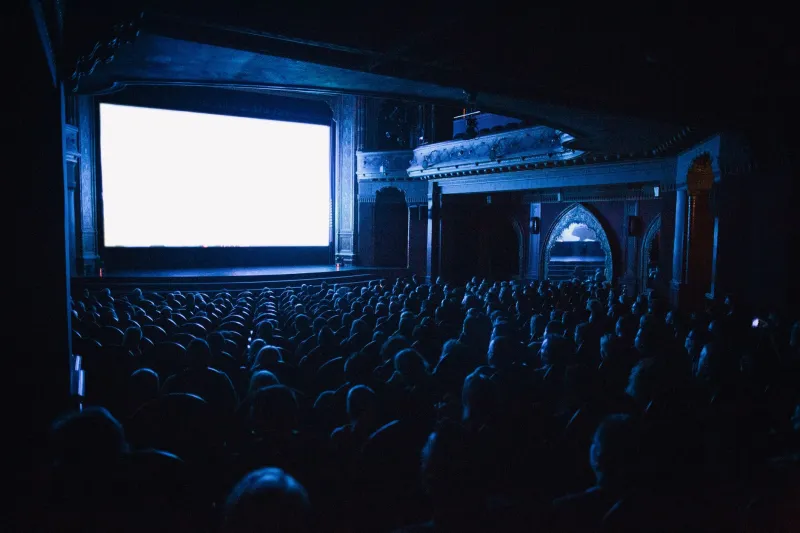
You caught it at Tara Theatre on a rainy Tuesday. Maybe it was a Romanian drama that made half the audience cry, or a documentary about a subject you'd never thought about before that somehow left you changed. You told your friends about it. You searched for it on Netflix, Max, Hulu. Nothing. You tried the free tiers. Still nothing. Weeks passed. Then months.
Welcome to what Atlanta's film community quietly calls the streaming gap — and it's more deliberate than you might think.
The Window Nobody Talks About
Most moviegoers are vaguely aware that theatrical releases precede streaming availability. What fewer people realize is that for independent and international films, that gap isn't just a formality — it's often a survival mechanism.
The standard theatrical exclusivity window, the period during which a film can only be seen in cinemas, has compressed dramatically for major studio releases since the pandemic. But for smaller films, the calculus is completely different. A limited indie release or a foreign-language film that premieres at a venue like the Landmark Midtown Art Cinema or the Plaza Theatre isn't competing with Marvel for streaming eyeballs. It's competing for its own existence.
"When a film only has a handful of U.S. screens, every single ticket sold matters in a way that just doesn't apply to a wide release," says one Atlanta-based film programmer who works with regional distributors. "If that movie hits a streaming platform before it's had a real chance to build word of mouth in physical spaces, you lose the audience before you ever had them."
The logic is counterintuitive in an era of instant access, but it holds up. Films that generate genuine buzz in specific cities — Atlanta included — often use that momentum to secure wider theatrical runs before any streaming deal is even negotiated.
Atlanta as a Testing Ground
Atlanta occupies a peculiar and valuable position in the independent film distribution ecosystem. The city's combination of a large, culturally diverse population, a robust arts community, and venues with loyal programming identities makes it a key early market for films looking to build national traction.
Distributors watch Atlanta screening numbers closely. A strong opening weekend at Midtown Art Cinema can directly influence whether a film gets picked up for additional markets or earns a more favorable streaming deal down the line. That means local programmers aren't just curating for their audiences — they're participating in a film's commercial life in ways that extend far beyond Georgia.
"We've had situations where a film we brought in early went on to win major awards and get wide releases," notes a programmer at one of Atlanta's independent venues. "And we've had films that just lived here, and nowhere else, and that was their whole run. Both of those outcomes are meaningful."
When Streaming Deals Fall Apart
Not every film without a streaming home is waiting for its moment. Some are stuck for reasons that have nothing to do with strategy and everything to do with money.
Streaming rights for foreign-language films are notoriously complicated. Licensing fees, subtitle rights, regional exclusivity clauses, and the sheer volume of content competing for platform placement mean that a critically acclaimed film from, say, South Korea or Senegal might never clear the legal and financial hurdles required to land on a major U.S. platform. The film exists. It screened in Atlanta. And then, for most of the country, it effectively disappeared.
This is particularly frustrating for Atlanta audiences who've grown accustomed to the city's international film programming. The Consulate series at certain local venues, periodic South Asian film showcases, and the ongoing programming tied to Atlanta's pan-African cinema community regularly surface titles that have no streaming presence whatsoever — not because no one wants them there, but because the infrastructure to get them there doesn't exist at scale.
The Cinephile's Dilemma
For Atlanta's more devoted film fans, the streaming gap creates a strange kind of privilege. Seeing a film during its theatrical run — especially at an independent venue — becomes a genuine event. There's no "I'll just watch it later." Later may never come.
That urgency changes how people engage with cinema. Conversations after screenings feel different when everyone in the room knows this might be the only chance to see the film on a large screen. Post-show discussions at venues like the Plaza, which regularly hosts filmmaker Q&As and community screenings, carry a weight that a Netflix watch party simply can't replicate.
But the flip side is real too. For Atlanta residents who work multiple jobs, have childcare responsibilities, or simply can't make it to a 7:30 p.m. weeknight screening, the theatrical-only window means missing films entirely. The streaming gap isn't just an inconvenience for the committed cinephile — it's a genuine barrier for anyone whose schedule doesn't bend toward the programming calendar.
What's Actually Changing
Some distributors are experimenting with hybrid models that try to thread this needle. Virtual cinema platforms, where a local theater "hosts" an online screening and receives a cut of revenue, emerged during the pandemic and haven't entirely gone away. A handful of Atlanta venues have used these setups to extend the reach of films that couldn't fill seats every night but still had an audience willing to pay for access.
The results have been mixed. Revenue from virtual screenings rarely approaches what a healthy in-person run generates, and the community experience is obviously lost. But for films that would otherwise vanish entirely, it's something.
Meanwhile, some filmmakers are pushing back against the pressure to chase streaming deals at all. A growing contingent of independent directors — including several with Atlanta connections — are deliberately structuring their release strategies around theatrical runs, prioritizing the big screen experience as a statement about what cinema is supposed to be.
"I didn't make this film to be background noise," one filmmaker told us after a recent Atlanta premiere. "If it never streams, that's not a failure. That's a choice."
Whether Atlanta audiences agree probably depends on whether they were in the theater that night — or whether they're still searching for it in their queue.