Reel Relics: Inside Atlanta's Obsession with Vintage Cinema Memorabilia
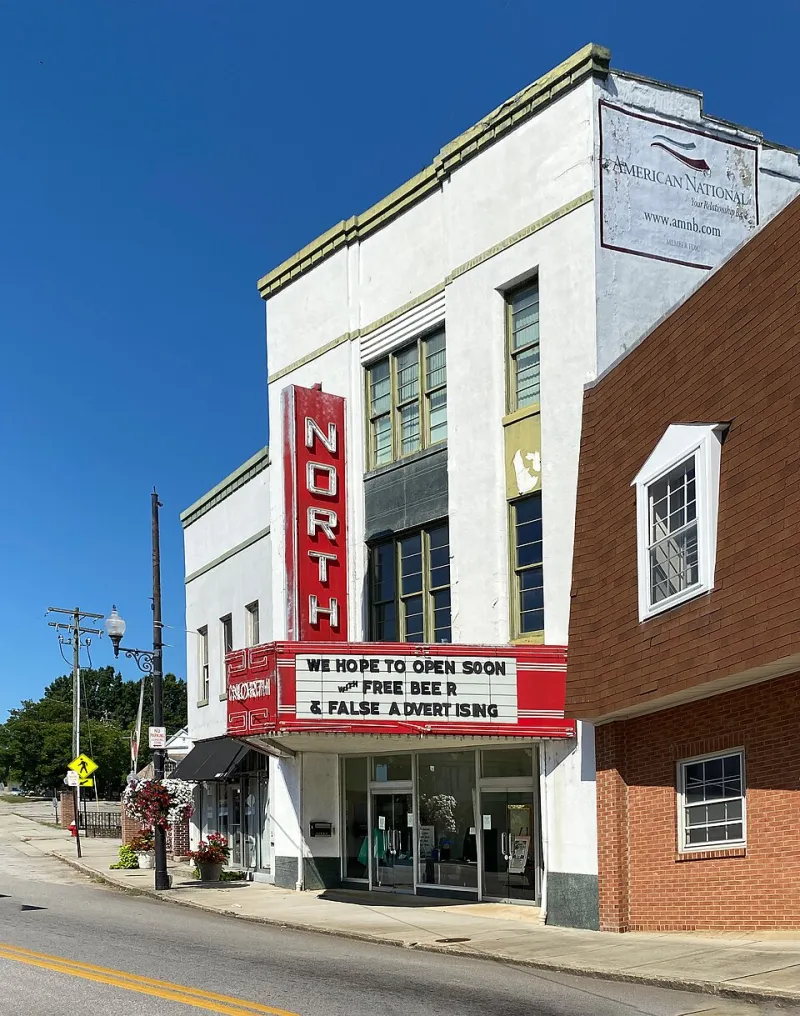
Photo: James Shelton32, CC BY-SA 4.0, via Wikimedia Commons
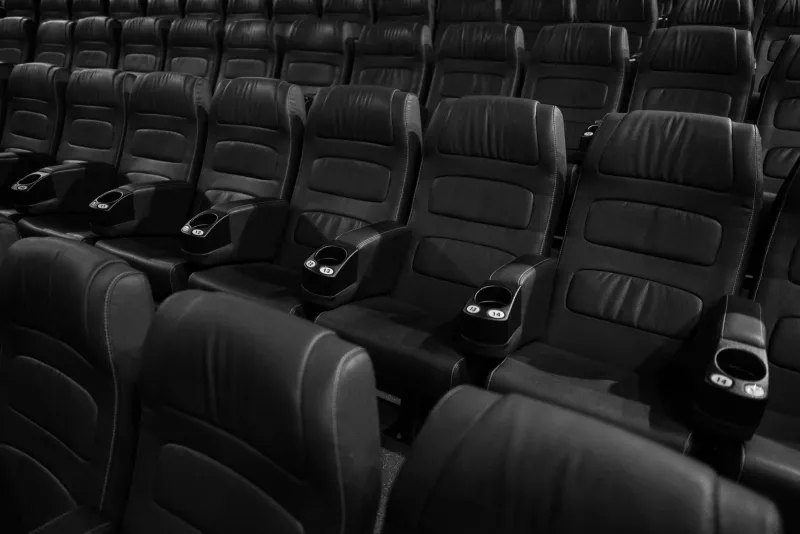
Somewhere in a climate-controlled storage unit off I-20, there are three rows of original wooden theater seats salvaged from a demolished Atlanta movie palace. Their upholstery is worn through in places, their folding mechanisms still work with a satisfying clunk, and their owner — a 58-year-old retired contractor named Gerald Pitts — has no immediate plans for them beyond keeping them safe.
"People ask me what I'm going to do with them," Pitts says, running a hand along one armrest. "I don't know yet. But I know they shouldn't be in a landfill."
This is the animating philosophy of Atlanta's vintage cinema memorabilia community: a conviction, sometimes bordering on compulsion, that the physical artifacts of moviegoing history deserve to survive. Lobby cards, projection reels, marquee letters, concession stand equipment, original architectural fragments from demolished theaters — all of it finds its way, eventually, to people like Pitts.
A City That Keeps Losing Its Theaters
Atlanta's relationship with its cinema history is complicated by the city's well-documented tendency to demolish its past. Dozens of theaters that once defined Atlanta's neighborhoods — grand downtown palaces, neighborhood houses, drive-ins scattered across the suburbs — are gone, leaving behind only photographs, memories, and whatever physical remnants passionate people managed to rescue before the wrecking ball arrived.
That loss is part of what drives the collecting impulse. When a building disappears, the objects that came out of it become proxies for the place itself.
"I have a marquee letter 'A' from a theater in southwest Atlanta that closed in the '80s," says collector Dana Whitfield, who operates a small vintage entertainment memorabilia business out of her home in East Point. "That theater is a parking lot now. But I have this letter, and it's three feet tall and made of steel, and when I look at it I can picture the marquee. It keeps the place alive in some small way."
Whitfield's collection spans several decades and multiple formats: one-sheets and lobby cards from the 1940s through the 1970s, original movie programs from Atlanta's downtown theaters, a working vintage popcorn machine, and an extensive archive of trade publications documenting the city's exhibition history.
The Market for Movie History
Vintage film memorabilia exists on a wide economic spectrum. At the high end, original theatrical posters for classic films — particularly pre-1960s one-sheets in good condition — can command thousands of dollars at auction. A pristine lobby card set from a major Hollywood studio production of the 1940s is a serious collectible.
But Atlanta's local collector community is largely operating in a different register: the hunt for regionally significant pieces, items tied to specific Atlanta theaters or to the history of moviegoing in the South. These don't always carry the same price tags as nationally recognized film art, but they carry a different kind of value.
"A poster for Gone with the Wind from its original Atlanta premiere run — that's a piece of Atlanta history as much as it is film history," says Marcus Teel, who teaches film studies at a local college and has been collecting for twenty years. "The provenance matters. Where something came from, who owned it, what theater it hung in — that's the story."
Teel has spent years documenting the history of Atlanta's defunct theaters, cross-referencing newspaper archives, city records, and personal testimonies to build a picture of what the city's cinema landscape looked like at its peak. His collection includes not just paper ephemera but architectural salvage: tile fragments, decorative plasterwork, and hardware pulled from theaters during demolition.
Where the Stuff Comes From
The supply chain for vintage cinema memorabilia is informal and relationship-driven. Estate sales are a major source — families clearing out the belongings of relatives who worked in exhibition or simply loved movies. Demolition contractors occasionally alert collectors when a theater building is coming down. Antique dealers and flea markets move pieces without always knowing their significance.
Atlanta's Scott Antique Markets, which draws thousands of buyers monthly, has become a reliable hunting ground for cinema-related pieces. Whitfield describes it as "a treasure hunt where you never know what's going to show up."
Online platforms have broadened the market considerably. eBay and specialized collector forums allow Atlanta enthusiasts to acquire pieces from theaters across the country, and to sell their duplicates to collectors elsewhere. But the local community still prizes locally sourced material above all.
"I can buy a lobby card from a theater in Chicago," says Pitts. "But what I really want is something that was here, in Atlanta, that Atlantans saw. That's what's irreplaceable."
Nostalgia Meets New Construction
The influence of vintage cinema culture isn't confined to storage units and collector shelves. It's showing up in the design language of new and renovated theater spaces across Atlanta.
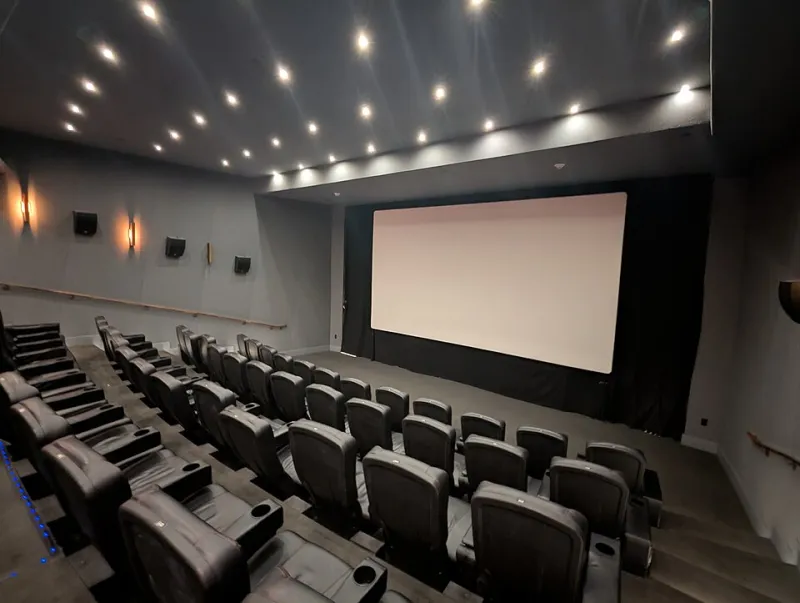
Several recently opened or renovated Atlanta cinemas have leaned explicitly into mid-century aesthetic references: terrazzo floors, neon signage, vintage-style concession stand designs, and lobby decor that evokes the golden age of moviegoing. Whether this represents genuine historical engagement or surface-level nostalgia tourism depends on who you ask.
"I think some of it is authentic and some of it is Instagram bait," Teel says, with a laugh. "But even the Instagram bait reflects a real hunger for that visual language. People respond to it because it signals that this is a special place, a place worth dressing up for."
For collectors like Whitfield, the trend has created new opportunities. She's consulted with several Atlanta theater renovation projects, helping source period-appropriate pieces for lobbies and providing historical context for design decisions.
"I helped a theater find original-era signage elements to complement their renovation," she says. "They wanted it to feel authentic, not like a theme park version of a 1950s theater. That's a conversation I'm always happy to have."
Preservation as Love Letter
What unites Atlanta's cinema memorabilia collectors — across different budgets, different specialties, different reasons for starting — is a shared conviction that the experience of going to the movies deserves a material record.
Streaming has made films more accessible than ever, but it has also made the act of watching them feel ephemeral. Nothing accumulates. Nothing has weight. You can't hold a streaming service in your hands.
"A lobby card is a physical object that existed at a specific moment in time," Teel says. "Someone designed it, someone printed it, someone hung it in a theater lobby in Atlanta, and someone saw it on their way in to watch a movie. That chain of human experience is real. It happened. I want to keep some trace of it."
Gerald Pitts, back in his storage unit, pats the arm of one of his salvaged theater seats. "Somebody sat in this seat and watched something that mattered to them," he says. "I like thinking about that."
So does Atlanta.